
Why New Year’s Resolutions Don’t Work — and What Ayurveda Teaches Us Instead

Amrita Ma Devi
Every year, millions of people step into January with hope in their hearts.
This will be the year I finally change. I’ll eat better, I’ll move more, I’ll stop burning myself out, I’ll finally feel like myself again.
And yet, by the end of January — or February at best — most of those intentions quietly fall away.
I know this pattern intimately, because I lived it for years.
What I’ve come to understand — both through lived experience and years of studying Ayurveda, nervous system health, and human behaviour — is this:
We don’t fail because we lack discipline.
We struggle because we’re trying to change from the surface, without listening to what’s happening underneath.
The Body Is Always Listening
Our culture teaches us that change happens through effort, willpower, and self-control. But the body doesn’t work that way.
Beneath our conscious intentions lies a powerful system constantly scanning for safety — the nervous system. Modern neuroscience tells us that nearly 95% of our thoughts, reactions, and behaviours happen beneath conscious awareness. The body is always asking one essential question:
Am I safe right now?
If the answer is “no,” the system shifts into protection. This is not weakness — it’s biology.

From a polyvagal perspective, when safety is compromised, the nervous system moves out of regulation. We become more reactive, more tired, more rigid or scattered. Digestion slows. Sleep becomes disturbed. Cravings increase. Motivation drops.
And yet, this is often the very moment we ask ourselves to do more.
Why Willpower Rarely Works
The brain is designed to conserve energy and protect us from threat. It naturally prefers familiarity over novelty — even when that familiarity is uncomfortable.
This is why we so often return to old habits, even when we know they don’t serve us. The brain chooses what feels predictable over what feels unknown.

Neuroscience calls this neural efficiency — the brain naturally follows the pathways it knows best because they require the least energy. Familiar thoughts, reactions, and habits become the brain’s default, even when they no longer serve us. This isn’t resistance or self-sabotage. It’s how the body creates efficiency.
The brain is designed to conserve energy and keep us safe. So it returns again and again to what is familiar, predictable, and known — even when those patterns create stress or limitation.
From an Ayurvedic perspective, this is the quality of tamas at work. Tamas is one of the three subtle qualities — or gunas — that shape our mind, body, and consciousness. You can watch my video here to learn more about them.
Tamas is the energy of inertia, heaviness, and rest. It’s what allows us to sleep, to slow down, to recover. But when tamas becomes excessive or unbalanced, it can show up as stagnation, fogginess, avoidance, or a sense of being stuck — even when part of us deeply wants to move forward. This isn’t laziness. It’s the body asking for safety, grounding, and restoration.
When tamas dominates, the nervous system often feels weighed down. Motivation feels distant, but it doesn´t have to stay that way. Change may feel overwhelming, but with awareness, self-compassion and community, I have seen it shift in the people I work with.
Bring awareness to the mind loops, these familiar thoughts, because they feel safer than the unknown. Notice that, in this awareness, the voice of forcing ourselves to “do better” or self-criticism often creates more resistance than healing.
Notice how this tama energy can make you feel heavy, inert, and protected. It settles in when the system has been overwhelmed for too long and needs rest, containment, or safety. When tamas is strong, the body resists change — not because it’s incapable, but because it’s conserving energy. Movement feels hard. Motivation feels distant. The mind loops familiar stories because they feel safer than the unknown.
At the same time, vata often becomes disturbed, creating mental agitation, overthinking, and nervous system dysregulation. The body wants to move forward, but something deeper is saying, not yet.
This is where so many people become stuck — trying to force movement through a system that actually needs grounding first.
Healing doesn’t come from pushing harder.
It comes from softening the weight of tamas and gently regulating vata, so movement can arise naturally.
When safety returns to the body, the nervous system begins to reorganise. The mind clears. Energy returns. Change becomes possible — not through effort, but through attunement.
This is why true transformation doesn’t start with discipline.
It starts with rest, warmth, rhythm, and presence.
Regulation Before Resolution
In Ayurveda, healing begins with rhythm. The body heals when it feels held in steady, predictable cycles — light and dark, rest and activity, nourishment and digestion.
Modern science reflects this through circadian biology, showing us that stable daily routine regulate hormones, metabolism, mood, and immune function. When these rhythms are disrupted — as they often are during the holidays — the system struggles to recalibrate.

This is why I no longer begin the year with rigid goals. Instead, I begin with regulation.
I ask:
What helps my body feel safe right now?
Where can I soften instead of push?
What rhythm would support me through this season?
Sometimes that looks like more sleep, rest, and downtime.
Sometimes it’s warm, grounding food.
Sometimes it’s saying no to what will overstimulate or fatigue—or saying yes —to something more soul-nourishing like a walk in nature or a few minutes of breathwork.
When the nervous system feels supported, something remarkable happens:
-Clarity returns on its own.
-Energy reorganises itself.
-Desire to care for oneself emerges naturally.
This is neuroplasticity in action — the brain’s ability to rewire through gentle, repeated experiences of safety.
The Healing Experience Is Remembering Who You Are
Healing is the quiet remembering of who you are beneath the coping, the striving, the stories you learned to survive.
True healing happens when the body feels safe enough to soften — when the nervous system no longer has to brace, protect, or prove. It’s the moment you stop trying to become someone else and begin inhabiting yourself fully.

Embodiment is not about doing more. It’s about being aware you are here — in your breath, in your sensations, in your truth.
When you are embodied, you’re no longer chasing healing. You’re listening authentically, and your body, mind, and soul love that.
A Different Kind of Beginning
This season, I invite you to release the pressure to “get it right.”
Instead of resolutions, choose regulation. Instead of striving, choose listening. Instead of forcing change, choose relationship — with your body, your breath, your rhythms.
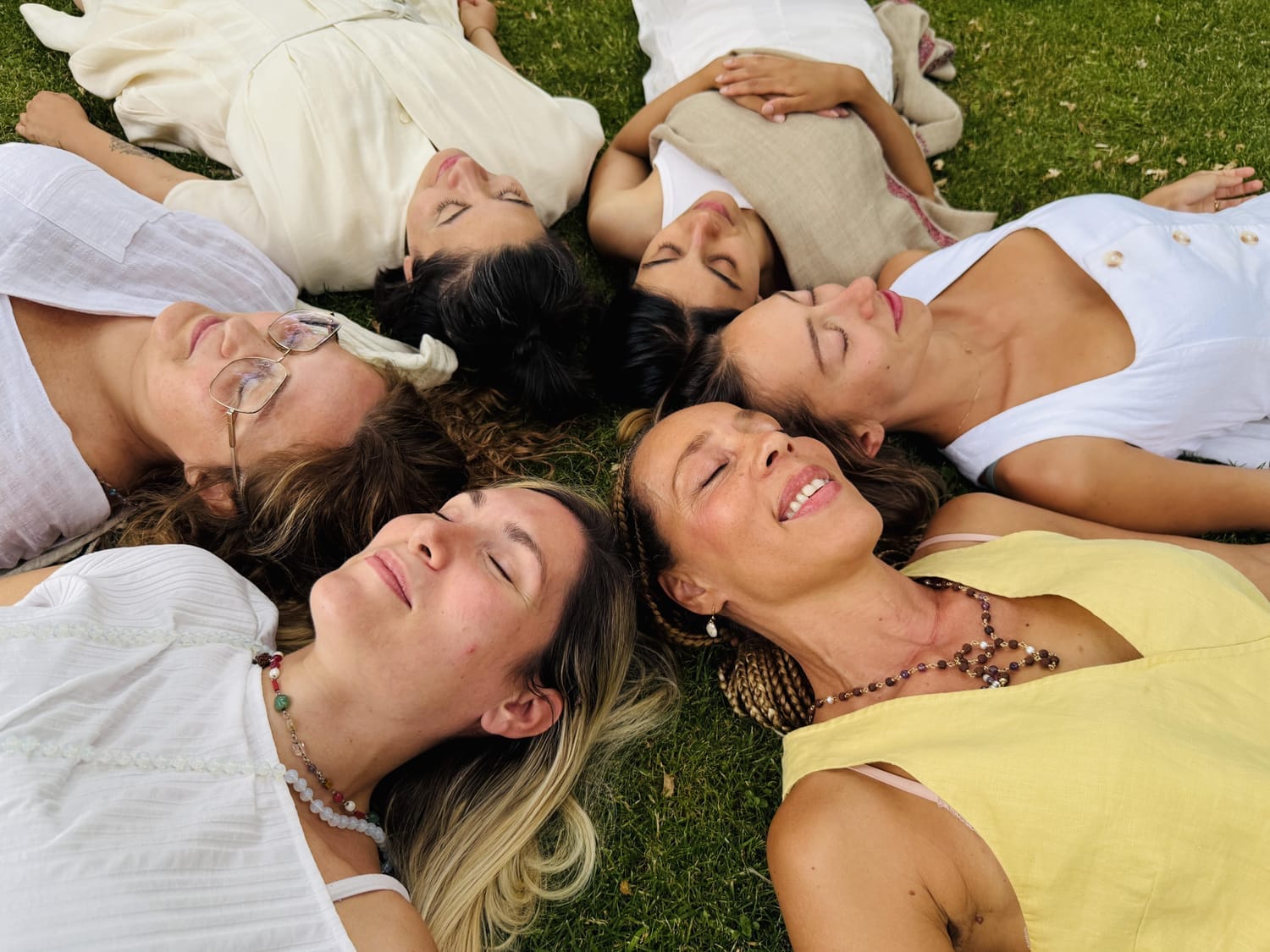
This is the foundation of everything I teach inside the Sacred Vitality Collective — a space rooted in nervous system wisdom, seasonal living, and compassionate self-inquiry. Because healing was never meant to be rushed, it begins with you. And you were never meant to do it alone.
Embodiment Is Remembering, Not Becoming
So much of what we call healing is actually remembering.
Remembering how to rest, how to listen.
Remembering how to trust the body’s intelligence.
You don’t need to become a new version of yourself.
You need to come back into a relationship with the one who’s always been here. The one who knows when to slow down. When to soften. When to say yes — and when to stop.
That is embodiment. That is healing.
Come home to yourself inside the Sacred Vitality Collective.
Our free community is a gentle space for healing, reflection, Ayurvedic self-care, yoga and nervous-system support.
Leave a Response
I’m Amrita, your new guide.
Welcome to my Cookbook!
“Amrita here. Mom of 3 and lover of ancient wisdom, meditation & yoga. I transformed my family’s health with a plant-based diet.”

Latest Recipes
Recipe Categories
Life Style Categories
Subscribe
Subscribe to our newsletter and be informed about new recipes & workshops.
You can visit more...
About Us
Ayurveda Anytime is a health consultancy service, products and eLearning platform geared towards nourishment from an Ayurvedic perspective. We are wholehearted beings who flourish when wellbeing and living in balance with nature are embodied.
© 2025 ayurvedaanytime.com. All rights reserved.